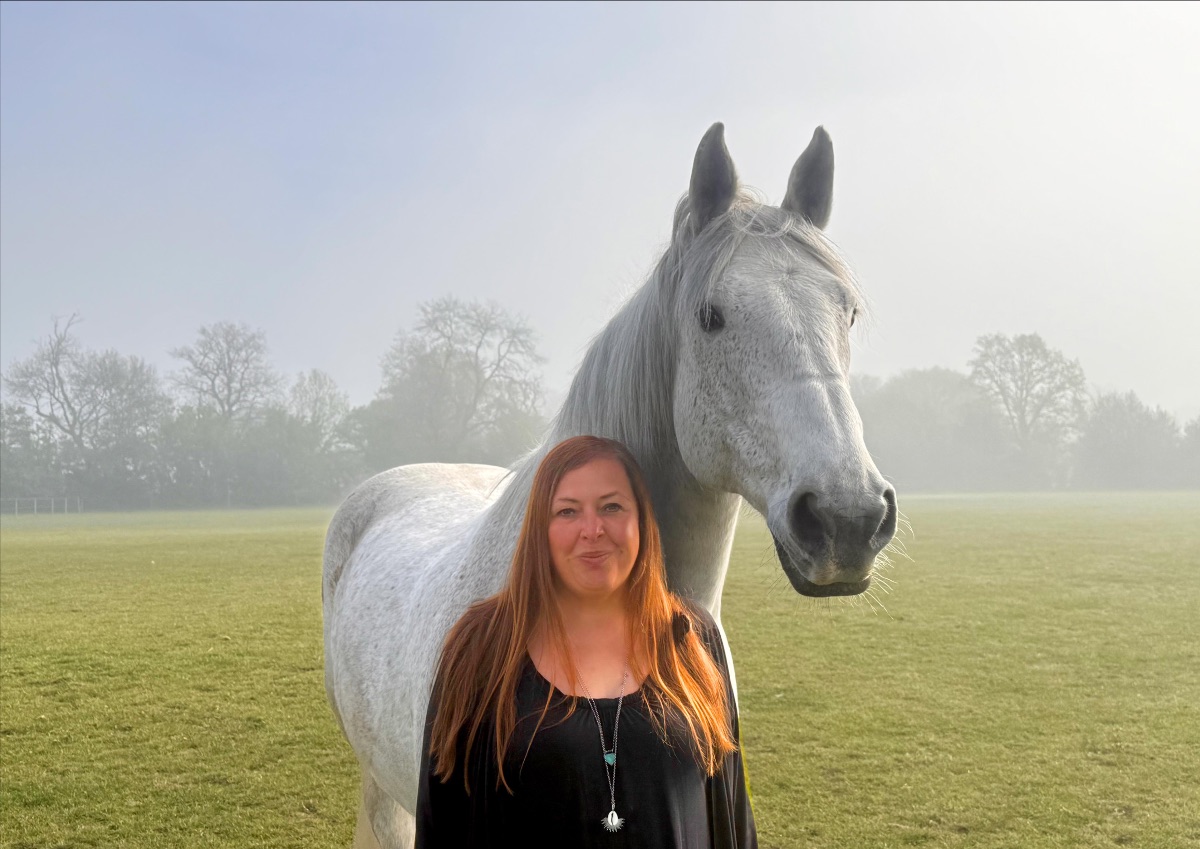
When I first stepped into a round pen at Featherheart Ranch, I was a global tech leader burning out hard, giving everything to my team and nothing to myself. Featherheart, the horse, raced around the pen in the SoCal heat, and I couldn’t slow her down. My coach Renee asked: “How might that show up in your life?” Suddenly I saw how I was really leading. Today I hold up that same mirror for leaders and their teams.
The human side of leadership
People are promoted for their expertise, not their readiness to lead. What’s hardest is rarely their craft. It’s the people: the messy, human side that no technical mastery prepares us for.
As prey animals, horses read energy, presence and intention long before words. Alongside them, leaders reconnect with the humanity busy careers train out of us: intuition, the wisdom of our bodies, the quality of our attention, and how we connect and collaborate. Rarely qualities a spreadsheet or performance review celebrates.
They also offer what leaders rarely receive: honest feedback, without agenda, narrative or politics. The higher we rise, the more people varnish what we hear. Horses show us how we actually show up, not how we imagine we do.
One sceptical leader had heard the same feedback for years: too directive. Within ten minutes, she felt why. Telling the horse meant nothing; her energy meant everything. As she eased off and brought clear, warm intention, Alfie moved at the pace and in the direction she chose. What she had intellectualised for years, she could finally embody.
The quiet work of the executive team
Most executive teams I work with are quietly misaligned. It’s rarely the brief, yet it consistently blocks results.
In a herd, leadership isn’t dominance. It means keeping everyone safe, steady and moving together, and it goes to whoever is most grounded in the moment. Horses move fluidly between sensing what they need, what the herd needs and what’s happening around them. Executives must hold the same three: themselves, their team and a fast-changing landscape.
With one executive team, the horses made the invisible visible. The CEO gave his team so much space that they didn’t feel connected to his vision, and Byron, one of the horses, didn’t know which way to go. When a colleague with coercive energy tried to move Byron, he dug his heels in and got stompy. Patterns the team had only named privately were in plain sight, opening honest conversations about supporting each other, not just leading their own teams.
From short-term targets to lasting value
When leaders return grounded, calm, clear and connected, something shifts. They stop just pushing harder and start serving, creating the conditions for others to do their best work. Teams feel safe enough to think creatively, challenge each other and take ownership. That is where people flourish, and where businesses move beyond chasing short-term targets to become exceptional: innovative, trusted, united by shared purpose and accountable to each other.
After 30 years in tech, I see AI’s relentless pace leaving leaders exhausted, racing to keep up with change no human was built for. We can’t outrun it. But we can learn to lead from steadier ground, creating room for innovation and transformation.
Back to what matters
The shift rarely stays at work. One leader’s children noticed it too. Leadership work often becomes whole-person transformation, reconnecting people with what truly matters and the future they really want.
Featherheart taught me to stop running and reconnect with my own needs. So I’ll leave you with a question: where might you be running, and who might you become if you stopped?
Martina Hodges-Schell is a certified Equus Coach® Master Facilitator and PCC, working with leaders and executive teams across the UK, US and Europe. Find out more at northshore.studio.
You can also watch Martina's conversation with Instructor Travis Stock about leading without burnout on YouTube.